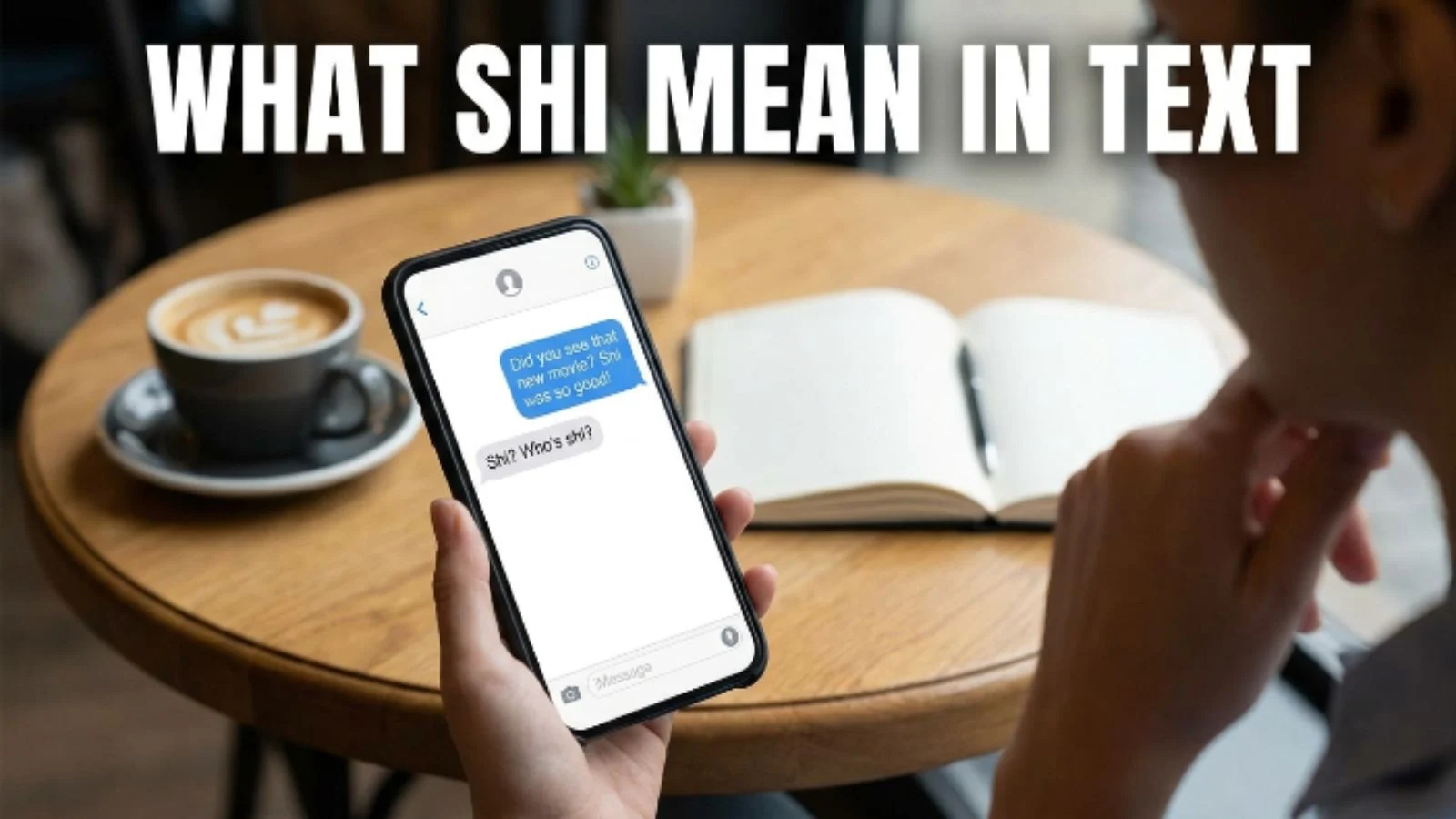
Have you ever received a message that simply said “shi” and wondered what it meant?
You’re not alone.
Internet slang changes fast, and new words appear on social media almost every day. One term that has become very popular, especially among younger users, is “shi.” You may see it on TikTok comments, Snapchat messages, Instagram captions, X posts, or even in text conversations with friends.
So, what exactly does “shi” mean in text?
In most cases, “shi” is simply a shortened or altered version of the word “shit.” People use it casually in conversations to refer to something, express emotions, talk about situations, or emphasize a point.
However, the meaning can change slightly depending on the context.
Let’s break it down in simple words.
What Does SHI Mean in Text?
SHI usually means “shit,” but it is often used in a casual, playful, or less aggressive way online.
People intentionally remove the “t” at the end to make the word look softer, trendier, or more suitable for social media conversations.
Quick Definition
SHI = A slang version of “shit” used to refer to things, situations, feelings, excitement, or emphasis in text messages and social media posts.
For example:
- “I got my shi together.”
- “That’s my shi.”
- “This shi is crazy.”
- “I’m tired of this shi.”
In these examples, “shi” works almost exactly like the original word but feels more casual and internet-friendly.
Simple Meaning of SHI
In everyday texting, shi often means “stuff,” “things,” or “situation.”
People use it when talking casually with friends.
Examples:
- “I need to finish my shi before tomorrow.”
- “Let me handle my shi first.”
- “She knows her shi.”
In simple English, these sentences mean:
- I need to finish my things before tomorrow.
- Let me handle my business first.
- She knows what she’s doing.
The exact meaning depends on the sentence.
Where Is SHI Used?
The slang term “shi” is extremely common across social media platforms.
TikTok
TikTok users often write:
- “This shi got me crying.”
- “That shi funny.”
The word helps create a casual and relatable tone.
You might see captions like:
- “Living my best shi.”
- “On my own shi.”
Snapchat
Friends often use it in personal conversations:
- “What shi you doing today?”
- “Handle your shi first.”
X (Twitter)
Many users include it in reactions:
- “This shi wild.”
- “I can’t believe this shi.”
Text Messages
People frequently use it when chatting with close friends.
Examples:
- “My shi finally arrived.”
- “Got all my shi packed.”
Why Do People Use SHI?
There are several reasons why people prefer using “shi” instead of the original word.
It Sounds More Casual
The shortened spelling feels relaxed and conversational.
It Matches Internet Culture
Many online communities create alternative spellings of common words.
Examples include:
- finna
- ion
- fr
- rn
- shi
It Looks Less Harsh
Some users feel that “shi” appears less offensive than writing the full word.
It’s Trendy
Social media trends often influence the way people type and communicate.
Using current slang helps users feel connected to online culture.
Real-Life Examples of SHI in Text
Understanding slang becomes easier when you see it in actual conversations.
Example 1
Friend 1: Did you finish your project?
Friend 2: Yeah, I finally got my shi done.
Meaning: I finished all my work.
Example 2
Friend 1: How was the concert?
Friend 2: That shi was amazing.
Meaning: The concert was amazing.
Example 3
Friend 1: Why are you stressed?
Friend 2: Too much shi going on right now.
Meaning: Too many things are happening.
Example 4
Friend 1: Is that your favorite song?
Friend 2: Yeah, that’s my shi.
Meaning: That’s something I really like.
Example 5
Friend 1: Did your package arrive?
Friend 2: Yep, my shi got here today.
Meaning: My package arrived today.
Different Ways SHI Can Be Used
The word isn’t always used in exactly the same way.
1. Referring to Things
Example:
- “Grab your shi.”
Meaning:
- Grab your stuff.
2. Referring to Personal Business
Example:
- “Get your shi together.”
Meaning:
- Organize your life or responsibilities.
3. Showing Surprise
Example:
- “This shi crazy.”
Meaning:
- This situation is unbelievable.
4. Showing Excitement
Example:
- “That’s my shi!”
Meaning:
- I really love that.
5. Expressing Frustration
Example:
- “I’m tired of this shi.”
Meaning:
- I’m tired of this situation.
SHI vs Similar Slang Terms
| Term | Meaning | Usage |
|---|---|---|
| SHI | Slang form of “shit” | Casual online conversations |
| STUFF | General items or things | Formal and informal |
| BUSINESS | Personal responsibilities | More professional |
| THINGS | Everyday objects or situations | Neutral language |
| SHIT | Original word | More direct and sometimes stronger |
Although they can overlap, “shi” usually sounds more modern and internet-focused.
When Should You Use SHI?
You can use “shi” when talking with friends or people who understand internet slang.
Good situations include:
- Casual texting
- Social media comments
- Group chats
- Funny conversations
- Online gaming chats
Appropriate Examples
- “Got my shi handled.”
- “This shi funny.”
- “That’s my shi.”
When You Should Avoid Using SHI
There are situations where using slang may not be appropriate.
Avoid using “shi” in:
- Job applications
- Business emails
- School assignments
- Professional meetings
- Formal communication
Instead, use words like:
- stuff
- things
- responsibilities
- tasks
- situation
Professional communication should remain clear and respectful.
Common Misunderstandings About SHI
Many people misunderstand this slang term.
Misunderstanding #1: SHI Is an Acronym
Some users assume each letter stands for something.
In most cases, it does not.
It’s simply a slang spelling of “shit.”
Misunderstanding #2: It Always Means Something Negative
Not true.
Sometimes it’s used positively.
Example:
- “That’s my shi.”
This means someone loves or enjoys something.
Misunderstanding #3: Everyone Uses It the Same Way
Different groups use slang differently.
Context always matters.
Misunderstanding #4: It’s Appropriate Everywhere
Even though it’s popular online, it may still sound unprofessional in formal settings.
Pro Tips for Using SHI Correctly
If you want to understand or use this slang naturally, keep these tips in mind.
Know Your Audience
Use it with friends who are familiar with internet slang.
Pay Attention to Context
The meaning changes depending on the sentence.
Avoid Formal Situations
Professional communication should use standard language.
Learn Related Slang
You may also encounter terms like:
- fr (for real)
- rn (right now)
- finna (going to)
- ion (I don’t)
- bet (okay)
- cap (lie)
Understanding related slang makes online conversations easier.
Don’t Overuse It
Using slang occasionally sounds natural.
Using it in every sentence can feel forced.
Is SHI Considered Offensive?
It depends on the audience.
Since it comes from the word “shit,” some people may still consider it mildly offensive.
However, among friends and social media users, it is often viewed as casual slang rather than serious profanity.
If you’re unsure, choose a more neutral word such as:
- stuff
- things
- situation
This helps avoid misunderstandings.
Final Thoughts
If you’ve been wondering what SHI mean in text, the answer is simple.
SHI is a slang version of the word “shit” that people use online to talk about things, situations, responsibilities, excitement, frustration, or something they really like.
The exact meaning depends on the context, but in most cases it simply refers to “stuff” or a situation being discussed.
You’ll commonly see it on TikTok, Instagram, Snapchat, X, and in everyday text messages between friends.
Understanding terms like “shi” can help you keep up with modern internet conversations and avoid confusion when chatting online.
Frequently Asked Questions (FAQ)
What does SHI mean in texting?
SHI is usually a slang version of “shit.” People use it casually to refer to things, situations, or emotions in online conversations.
Is SHI a bad word?
It can be considered mildly offensive because it comes from the word “shit.” However, many social media users treat it as casual slang.
What does “that’s my shi” mean?
It means “I really like that” or “that’s my favorite thing.”
Example:
“That song is my shi.”
What does “get your shi together” mean?
It means to organize your responsibilities, solve your problems, or become more responsible.
Is SHI popular on TikTok?
Yes. SHI is commonly used on TikTok, Instagram, Snapchat, and other social media platforms where internet slang is popular.