Have you ever received a text that simply said “PFF” and wondered what it actually meant?
At first glance, it can look confusing. Is it an abbreviation? Is someone upset? Are they laughing? The truth is that PFF is one of those internet expressions that can mean different things depending on the conversation.
If you’ve seen it on Snapchat, Instagram, TikTok, WhatsApp, or in a text message, you’re not alone. Many people encounter this slang and aren’t quite sure how to interpret it.
In this guide, you’ll learn exactly what does PFF mean in text, how people use it, when you should use it, and what message it typically conveys.
What Does PFF Mean in Text?
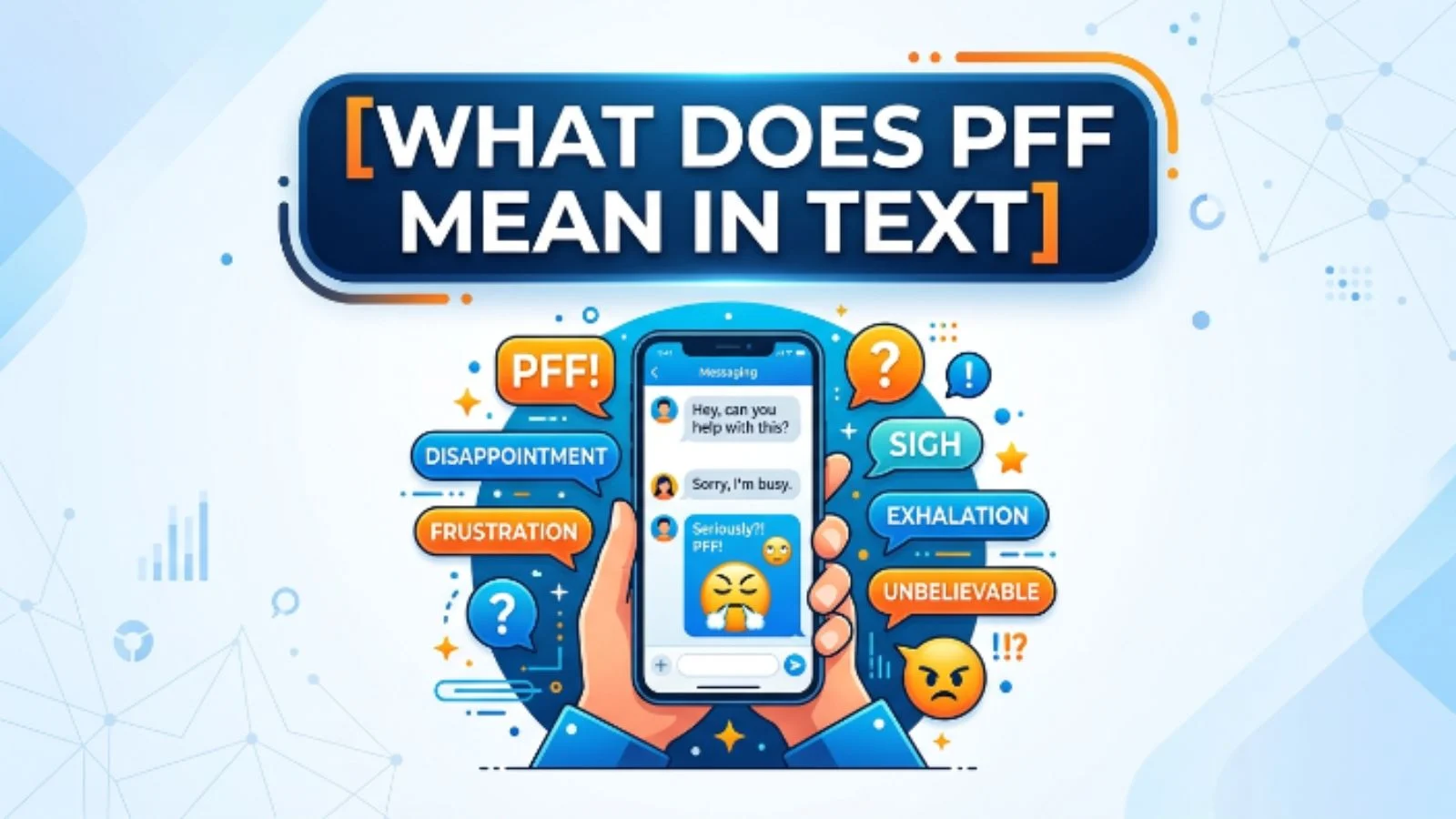
PFF is a text expression used to show disbelief, annoyance, sarcasm, dismissal, or amusement.
Unlike many internet abbreviations, PFF isn’t usually short for a phrase. Instead, it represents the sound someone makes when they scoff, roll their eyes, or react sarcastically.
Quick Definition
PFF means a dismissive or sarcastic reaction, similar to saying “yeah right,” “whatever,” or making a scoffing sound.
The meaning depends heavily on the tone and context of the conversation.
Simple Meaning of PFF
Think of PFF as the digital version of someone:
- Rolling their eyes
- Laughing at an unrealistic statement
- Acting unimpressed
- Showing mild annoyance
- Playfully disagreeing
For example:
Person 1: “I’m the best gamer in the world.”
Person 2: “PFF, sure you are.”
In this case, PFF expresses playful disbelief.
Where Is PFF Used?
You’ll commonly see PFF across many online platforms.
Text Messages
Friends often use it when joking around or responding sarcastically.
Snapchat
PFF is popular in casual chats where users react quickly to stories or messages.
People may use it in comments, captions, or direct messages to express disbelief or amusement.
TikTok
You’ll often find PFF in comment sections when users react to exaggerated claims or funny videos.
Friends and family may use it during informal conversations to show playful skepticism.
Online Gaming
Gamers frequently type PFF when teasing teammates or reacting to unexpected events.
Why Do People Use PFF?
There are several reasons why PFF has become popular.
It Saves Time
Instead of typing a full response, users can quickly express their reaction with just three letters.
It Adds Personality
PFF helps convey emotion that plain text sometimes lacks.
It’s Playful
Most of the time, PFF is used in a lighthearted way rather than as a serious insult.
It Shows Disbelief
People use it when they don’t fully believe what’s being said.
Different Meanings of PFF Depending on Context
One interesting thing about PFF is that its meaning changes based on the conversation.
1. Disbelief
Someone says something hard to believe.
Example:
“I can run 100 miles without stopping.”
Response: “PFF.”
Meaning: “I don’t believe that.”
2. Sarcasm
Used to mock or joke about a statement.
Example:
“I’m always on time.”
Response: “PFF, that’s funny.”
Meaning: The person is being sarcastic.
3. Dismissal
Someone doesn’t consider a comment important.
Example:
“He thinks he’s famous.”
Response: “PFF.”
Meaning: “Whatever.”
4. Playful Teasing
Friends often use PFF while joking.
Example:
“I’m smarter than everyone here.”
Response: “PFF, keep dreaming.”
Meaning: Friendly teasing.
5. Mild Annoyance
Sometimes it expresses frustration.
Example:
“The internet stopped working again.”
Response: “PFF.”
Meaning: Annoyed or irritated.
Real-Life Examples of PFF in Text
Let’s look at some common conversations.
Example 1: Friendly Joke
Friend: “I could beat you in basketball.”
You: “PFF, not a chance.”
Meaning: Playful disagreement.
Example 2: Disbelief
Friend: “I met a celebrity today.”
You: “PFF, seriously?”
Meaning: Skeptical but curious.
Example 3: Sarcasm
Coworker: “This project was so easy.”
You: “PFF, sure.”
Meaning: You disagree sarcastically.
Example 4: Frustration
Friend: “The app crashed again.”
You: “PFF, that’s annoying.”
Meaning: Mild irritation.
PFF vs Similar Text Terms
| Term | Meaning | Tone |
|---|---|---|
| PFF | Disbelief, sarcasm, dismissal | Playful or skeptical |
| LOL | Laughing out loud | Funny |
| SMH | Shaking my head | Disappointment |
| BRUH | Seriously? Really? | Surprise or frustration |
| UGH | Annoyance | Frustrated |
| IDC | I don’t care | Indifferent |
While these expressions may seem similar, PFF specifically carries a scoffing or dismissive tone.
When Should You Use PFF?
PFF works best in casual conversations.
Good Situations
- Chatting with friends
- Responding to jokes
- Friendly teasing
- Social media comments
- Casual texting
Examples
- “PFF, that’s impossible.”
- “PFF, nice try.”
- “PFF, you’re hilarious.”
When You Should Avoid Using PFF
Although common online, PFF isn’t appropriate everywhere.
Professional Settings
Avoid using PFF in:
- Work emails
- Business messages
- Job applications
- Professional networking conversations
Serious Conversations
If someone is discussing an important issue, PFF may come across as rude or dismissive.
Formal Communication
Stick to clear language in formal situations.
Common Misunderstandings About PFF
Many people misunderstand this slang.
Myth 1: PFF Is Always Rude
Not true.
Most users employ it playfully with friends.
Myth 2: PFF Is an Acronym
In most cases, PFF isn’t short for anything.
It’s usually just a written representation of a scoffing sound.
Myth 3: PFF Means Laughter
While it can be used jokingly, it doesn’t directly mean laughter like LOL.
Myth 4: PFF Always Means Anger
Not necessarily.
It often indicates mild disbelief rather than actual anger.
How to Tell What PFF Means in a Conversation
To understand PFF correctly, pay attention to:
The Relationship
Friends often use PFF jokingly.
The Topic
Serious topics may give PFF a more dismissive tone.
Additional Words
Compare these examples:
- “PFF, sure.”
- “PFF, whatever.”
- “PFF, that’s funny.”
Each has a slightly different meaning.
Emojis or Punctuation
Extra punctuation often changes the tone.
Examples:
- “PFF!” = Strong reaction
- “PFF…” = Dismissive
- “PFF lol” = Playful
Pro Tips for Using PFF Correctly
Know Your Audience
Use PFF mainly with people who understand your humor.
Don’t Overuse It
Using PFF too often can make you sound dismissive.
Consider the Context
Always think about how the other person may interpret your message.
Pair It with Other Words
Instead of simply typing PFF, add context.
Examples:
- “PFF, that’s not true.”
- “PFF, good one.”
- “PFF, I can’t believe it.”
This reduces confusion.
Is PFF Positive or Negative?
The answer is: it can be both.
Positive Uses
- Friendly teasing
- Joking with friends
- Playful sarcasm
Negative Uses
- Dismissing someone’s opinion
- Showing annoyance
- Expressing skepticism
That’s why context matters so much.
Final Thoughts
If you’ve been wondering what does PFF mean in text, the simple answer is that it’s a way of expressing disbelief, sarcasm, dismissal, amusement, or mild annoyance.
Rather than being a traditional acronym, PFF usually imitates a scoffing sound people make when they find something hard to believe or slightly ridiculous.
Most of the time, it’s used casually among friends and on social media. As long as you understand the context and tone, you’ll have no trouble figuring out what someone means when they type PFF.
Frequently Asked Questions
What does PFF mean from a girl?
When a girl texts PFF, it usually means disbelief, playful sarcasm, teasing, or mild annoyance. The exact meaning depends on the conversation.
Is PFF rude?
Not always. PFF is often used jokingly among friends. However, in serious conversations it may seem dismissive or rude.
Is PFF an acronym?
Usually no. PFF is generally considered a written version of a scoffing sound rather than an abbreviation.
What is the difference between PFF and LOL?
LOL means “laughing out loud,” while PFF usually expresses disbelief, sarcasm, or dismissal rather than laughter.