If you spend time on social media, texting apps, or online chats, you may have seen the word FOMO. Many people use it when talking about events, trends, parties, or even shopping.
But what does it really mean?
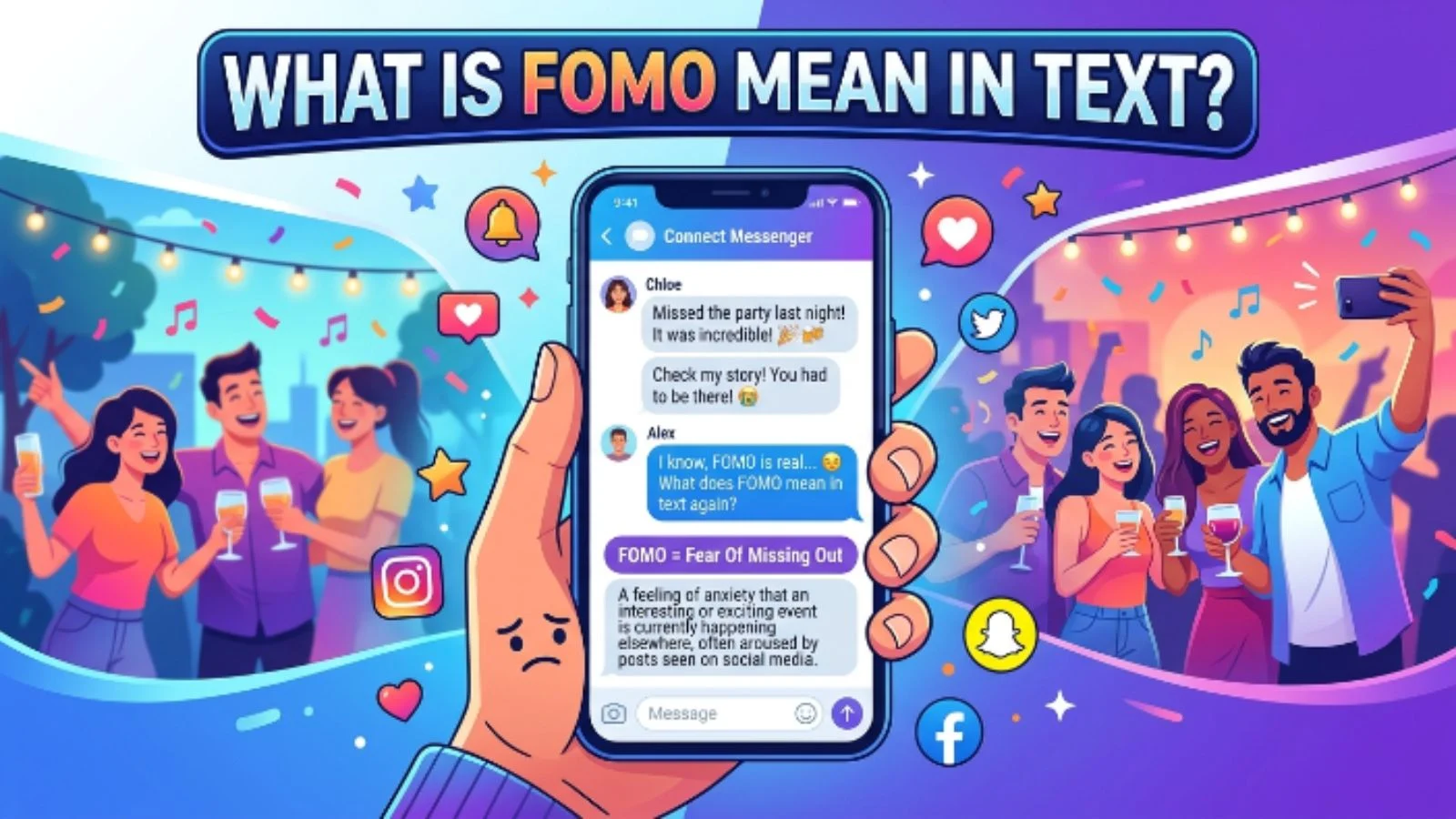
FOMO stands for “Fear Of Missing Out.”
It describes the feeling that other people are having fun, enjoying something exciting, or getting special opportunities without you.
In texting and online conversations, people use FOMO to say they feel left out or worried about missing something important or fun.
For example:
- “Everyone is going to the concert and now I have FOMO.”
- “I saw my friends traveling online and got serious FOMO.”
In simple words, FOMO means:
“I don’t want to miss what everyone else is doing.”
This term became very popular because of social media platforms like Instagram, TikTok, Snapchat, and Facebook, where people constantly share exciting moments from their lives.
Simple Definition of FOMO
Here is an easy definition:
| Term | Meaning |
|---|---|
| FOMO | Fear Of Missing Out |
| Used In | Text messages, social media, chats |
| Emotion | Feeling left out or missing fun |
| Tone | Casual, emotional, relatable |
People often use FOMO when they:
- Miss a party
- See friends hanging out
- Skip an event
- Miss online trends
- Cannot buy something popular
- Feel excluded from a group
What Does FOMO Mean in Text Messages?
In texting, FOMO usually expresses a feeling of regret or anxiety about not joining something.
Example 1
Friend 1: “We’re all watching the game tonight.”
Friend 2: “Stop, you’re giving me FOMO.”
Explanation
Friend 2 feels sad about missing the activity.
Example 2
Text: “I skipped the trip and now I have major FOMO.”
Explanation
The person regrets not going on the trip after seeing others enjoy it.
Example 3
Text: “TikTok trends give me FOMO sometimes.”
Explanation
The person feels pressure to join trends because everyone else is doing them.
Origin and History of FOMO
The phrase Fear Of Missing Out existed before the internet became popular, but the short form FOMO became famous in the early 2000s.
Early Use
Experts believe the term started becoming common in marketing and psychology discussions.
Later, social media made the word extremely popular.
Why Social Media Increased FOMO
Apps like:
- Snapchat
- TikTok
- YouTube
allowed people to constantly see:
- vacations
- parties
- achievements
- luxury lifestyles
- friendships
- shopping hauls
As a result, many users started comparing their lives to others.
This comparison created feelings of anxiety and exclusion.
Why Do People Feel FOMO?
FOMO is connected to human emotions and social behavior.
People naturally want:
- inclusion
- friendship
- excitement
- success
- attention
- belonging
When they think others are enjoying something without them, they may feel worried or unhappy.
Common Causes of FOMO
| Cause | Example |
|---|---|
| Social media | Seeing friends at a party |
| Trends | Missing a viral challenge |
| Shopping | Limited-time sales |
| Gaming | Missing online events |
| Relationships | Feeling excluded from groups |
| Career success | Seeing others achieve goals |
How FOMO Is Used in Modern Texting in 2026
In 2026, FOMO is used in many different ways online.
People use it seriously, jokingly, or casually.
Social Media Posts
- “That beach trip gave me FOMO.”
- “Everyone has the new phone except me. FOMO is real.”
Gaming
- “I missed the live event and now I have FOMO.”
- “Gamers always feel FOMO during limited events.”
Shopping
- “The sale ends tonight and my FOMO is kicking in.”
Streaming and TV
- “Everyone watched the new series already. I’m feeling FOMO.”
Different Types of FOMO
FOMO is not always about parties or fun events.
There are many forms of it.
Social FOMO
This happens when people feel left out socially.
Example
Seeing friends eating at a restaurant without you.
Explanation
You may feel excluded from the group.
Travel FOMO
This happens when people see others traveling.
Example
“Everyone is going to Japan this year.”
Explanation
The person feels they are missing exciting experiences.
Tech FOMO
This involves gadgets and technology.
Example
“I still use my old phone and everyone upgraded.”
Explanation
The person feels pressure to keep up with trends.
Financial FOMO
This is common in investing and online business.
Example
“People made money from crypto and I missed it.”
Explanation
The person fears losing opportunities others enjoyed.
Relationship FOMO
This involves dating or friendships.
Example
“All my friends are in relationships.”
Explanation
The person feels emotionally left behind.
Personality Traits Linked to FOMO
Some people experience FOMO more strongly than others.
People Who Often Feel FOMO May Be:
- very social
- emotionally sensitive
- highly curious
- competitive
- active on social media
- worried about missing opportunities
This does not mean something is wrong with them.
It simply means they care deeply about experiences and connections.
Signs Someone Has FOMO
Here are common signs.
| Sign | Meaning |
|---|---|
| Checking phone constantly | Fear of missing updates |
| Joining trends quickly | Wanting inclusion |
| Saying yes to everything | Fear of being left out |
| Feeling jealous online | Comparing life to others |
| Trouble relaxing offline | Need to stay connected |
Positive Side of FOMO
FOMO is not always negative.
Sometimes it motivates people to:
- try new things
- meet friends
- explore opportunities
- learn skills
- stay informed
Example
“I joined the class because I had FOMO after hearing everyone talk about it.”
Explanation
FOMO encouraged the person to participate and learn.
Negative Side of FOMO
Too much FOMO can create stress.
It may lead to:
- anxiety
- low self-esteem
- overspending
- social pressure
- burnout
- unhealthy comparison
Example
“I stayed online all night because I didn’t want to miss anything.”
Explanation
The fear of missing updates affected the person’s sleep.
Real-Life Examples of FOMO in Text
Here are beginner-friendly examples.
Example 1
Text: “You guys are at the concert? I have FOMO now.”
Explanation
The speaker wishes they were there too.
Example 2
Text: “Everyone bought the new sneakers and now I want them.”
Explanation
The person feels pressure because others have them.
Example 3
Text: “I deleted Instagram because of FOMO.”
Explanation
Social media made the person feel emotionally stressed.
Example 4
Text: “This game event ends tonight and my FOMO is crazy.”
Explanation
The player fears missing limited rewards.
Example 5
Text: “Seeing everyone graduate gave me FOMO about college life.”
Explanation
The person feels they missed an important life experience.
Short Dialogues Using FOMO
Dialogue 1
Ali: “We’re going camping this weekend.”
Sara: “Don’t tell me that. I already have FOMO.”
Explanation
Sara feels sad she cannot join the trip.
Dialogue 2
Ayan: “Did you watch the new episode?”
Hina: “Not yet, but everyone online is talking about it.”
Ayan: “That’s pure FOMO.”
Explanation
Hina feels pressure to watch it quickly.
Dialogue 3
Usman: “The sale ends in one hour.”
Bilal: “Now my shopping FOMO started.”
Explanation
Bilal fears missing a good deal.
FOMO on Social Media Platforms
Different platforms create different types of FOMO.
| Platform | Common FOMO Type |
|---|---|
| Travel and lifestyle | |
| TikTok | Trends and challenges |
| Snapchat | Friend activities |
| Career success | |
| YouTube | Viral content |
| Discord | Gaming events |
FOMO in Teen Culture
Teenagers often use the word FOMO casually.
Examples include:
- school events
- online games
- fashion trends
- music releases
- friendship groups
Example
“I missed the school trip and got huge FOMO from the pictures.”
Explanation
Photos made the student feel left out.
FOMO in Adult Life
Adults also experience FOMO.
Common situations include:
- career achievements
- weddings
- vacations
- financial success
- parenting milestones
Example
“All my coworkers attended the conference except me.”
Explanation
The person worries they missed an important opportunity.
FOMO vs Jealousy
Many people confuse these terms.
Here is the difference.
| FOMO | Jealousy |
|---|---|
| Fear of missing experiences | Wanting what others have |
| Focused on exclusion | Focused on comparison |
| Often temporary | Can be emotional and deeper |
| Linked to social events | Linked to possessions or relationships |
Common Mistakes About FOMO
Thinking FOMO Only Means Parties
Wrong.
FOMO can involve:
- money
- relationships
- gaming
- trends
- education
- technology
Thinking FOMO Is Always Serious
Not always.
People often use it jokingly.
Example
“You’re eating pizza without me? FOMO.”
Explanation
The speaker is playful, not deeply upset.
Thinking Only Young People Use FOMO
Incorrect.
Adults, professionals, parents, and businesses also use the term.
Modern FOMO Trends in 2026
FOMO changes with online culture.
Here are modern examples.
AI and Tech FOMO
Many people fear missing new AI tools and technology updates.
Example
“Everyone is learning AI skills and I feel behind.”
Explanation
The person fears missing future opportunities.
Creator Economy FOMO
People compare themselves to influencers and creators.
Example
“I should start a channel too.”
Explanation
The person feels pressure after seeing others succeed online.
Fitness and Wellness FOMO
Social media fitness trends create pressure.
Example
“Everyone joined the new workout challenge.”
Explanation
The person feels left out of healthy lifestyle trends.
Event FOMO
Limited online events create urgency.
Example
“Tickets sold out already and now I regret waiting.”
Explanation
The person missed an opportunity.
How to Respond When Someone Says “I Have FOMO”
Here are natural replies.
| Someone Says | Possible Reply |
|---|---|
| “I have FOMO.” | “You should join next time.” |
| “This trip gives me FOMO.” | “We’ll plan another one together.” |
| “I missed the event.” | “Don’t worry, there will be more.” |
Similar Slang Terms Related to FOMO
| Slang | Meaning |
|---|---|
| YOLO | You Only Live Once |
| JOMO | Joy Of Missing Out |
| Flex | Showing off |
| Viral | Popular online |
| Trendy | Fashionable or popular |
What Is JOMO?
JOMO is the opposite of FOMO.
It means:
Joy Of Missing Out
This describes enjoying peace and privacy instead of worrying about missing events.
Example
“I stayed home, relaxed, and enjoyed the JOMO.”
Explanation
The person felt happy not attending the event.
Is FOMO a Real Psychological Feeling?
Yes.
Psychologists and researchers have studied FOMO for years.
It is connected to:
- social belonging
- emotional health
- digital behavior
- anxiety
- comparison culture
However, occasional FOMO is normal for many people.
Should You Worry About FOMO?
Small amounts of FOMO are common.
But if it starts affecting:
- sleep
- mental health
- spending habits
- relationships
- confidence
then reducing social media time may help.
Healthy habits include:
- taking breaks offline
- focusing on personal goals
- limiting comparison
- enjoying real-life experiences
FAQs About FOMO Meaning in Text
What does FOMO stand for in text?
FOMO stands for Fear Of Missing Out. It means feeling worried or left out when others are doing something exciting without you.
Is FOMO a negative word?
Not always. Sometimes it is used jokingly or casually. But strong FOMO can create stress or anxiety.
How do teenagers use FOMO?
Teenagers use FOMO when talking about parties, trends, games, social media, and school activities they missed.
What is the opposite of FOMO?
The opposite is JOMO, which means Joy Of Missing Out. It describes enjoying time away from social pressure.
Is FOMO caused by social media?
Social media increases FOMO because people constantly see updates, pictures, and videos of others having fun or succeeding.
Can adults experience FOMO too?
Yes. Adults often experience FOMO related to careers, money, travel, relationships, and lifestyle choices.
Is saying “I have FOMO” common in 2026?
Yes. FOMO remains one of the most popular internet slang terms in texting, social media, gaming, and online culture in 2026.
Conclusion
Now you know the answer to the question, “What is FOMO mean in text?” The term FOMO means Fear Of Missing Out, and it describes the feeling of being left out when others are enjoying experiences, trends, or opportunities without you. People use it every day in texting, gaming, social media, and real-life conversations. While FOMO can sometimes create stress, it is also a normal human emotion connected to curiosity and social connection. Understanding how people use FOMO can help you better understand online conversations and modern internet culture in 2026.