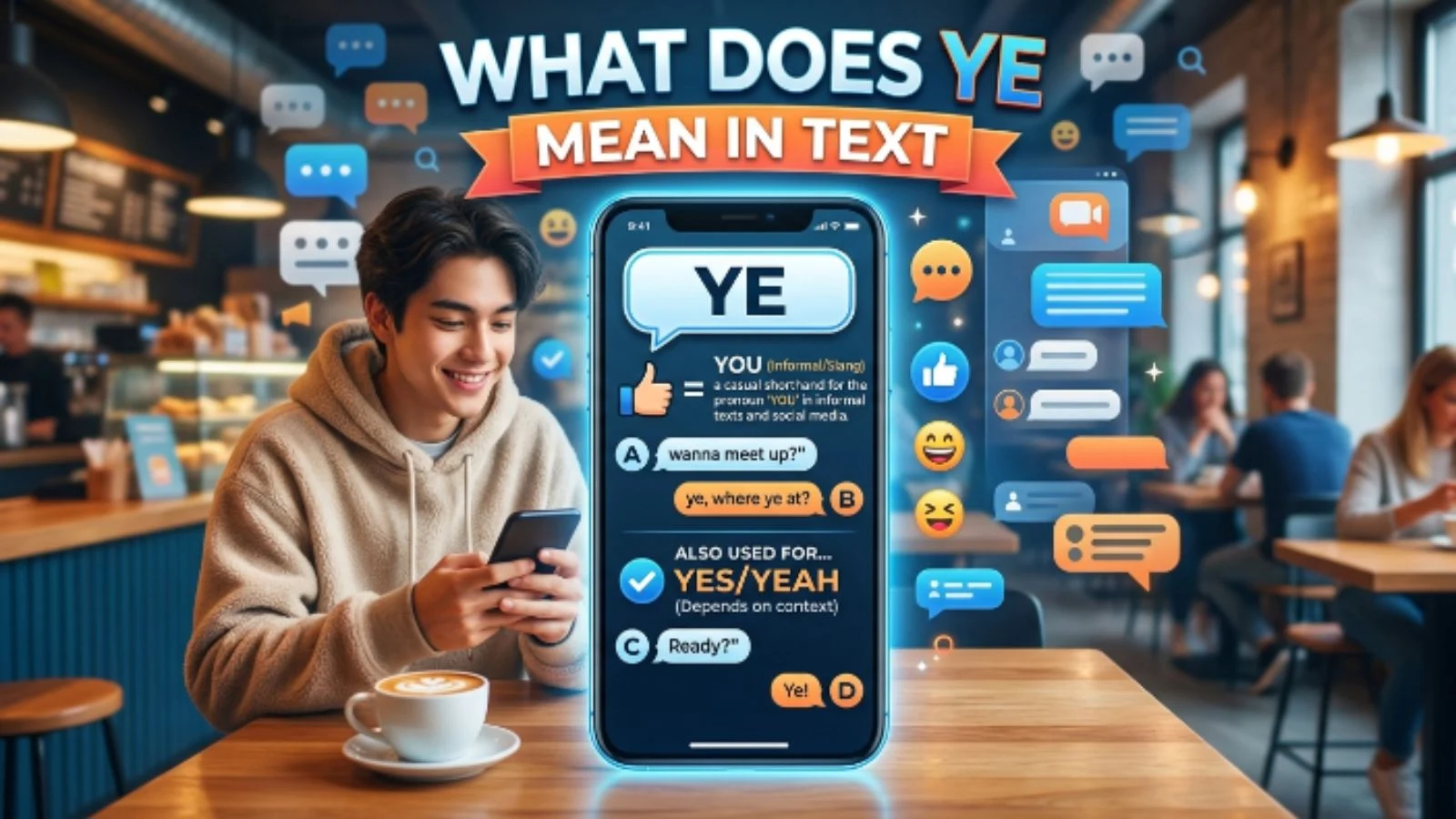
If you have received a message containing “ye”, you may wonder what it means. The word “ye” can have several meanings depending on the conversation, region, and platform where it is used.
In modern texting, “ye” most commonly means “yes” or is used as a casual way to agree with someone. However, it can also refer to an old English word meaning “you”, or it may be used as a nickname associated with popular culture.
Understanding the context is important because the meaning can change from one conversation to another.
In this guide, you will learn everything about what does ye mean in text, including its meaning, history, examples, usage, common misconceptions, and modern trends in 2026.
Simple Definition of Ye in Text
The most common meaning of “ye” in text messages is:
Ye = Yes
People often shorten words while texting to save time. Instead of typing the full word “yes,” some users simply type “ye.”
Example
Person A: Are you coming tonight?
Person B: Ye
Explanation: Here, “ye” means “yes.” The person is confirming they will come.
What Does Ye Mean on Social Media?
On social media platforms such as Instagram, TikTok, Snapchat, Facebook, and X, “ye” usually means:
- Yes
- Agreed
- Sure
- Okay
- Correct
Users often prefer shorter words because they are quick to type.
Example
Comment: This song is amazing.
Reply: Ye, I’ve listened to it all day.
Explanation: The user agrees that the song is amazing.
Main Meanings of Ye in Text
The meaning of “ye” depends on context.
| Meaning | Usage | Example |
|---|---|---|
| Yes | Agreement | “Ye, I’ll be there.” |
| You (Old English) | Historical usage | “Hear ye, hear ye.” |
| Casual response | Informal chats | “Ye, sounds good.” |
| Nickname reference | Popular culture | “Did you hear about Ye?” |
Among these meanings, “yes” is by far the most common in texting.
Origin and History of Ye
The word “ye” has a very long history.
Ye in Old English
Centuries ago, “ye” was used as a pronoun that meant “you.”
People in medieval England commonly used “ye” when speaking to more than one person or in formal situations.
Historical Example
“Ye shall enter the kingdom.”
Explanation: In this sentence, “ye” means “you.”
Over time, modern English replaced “ye” with “you,” and the older form became less common.
Ye in Modern Texting
Today, the word has developed a new purpose.
Text messaging encourages short communication. As a result, many users began typing:
- Yeah
- Yep
- Ye
Instead of writing a full response.
This modern usage is completely different from the historical meaning.
Why Do People Use Ye Instead of Yes?
There are several reasons.
Faster Typing
Typing two letters is quicker than typing three or four.
Casual Communication
“Ye” sounds relaxed and friendly.
Internet Culture
Many online communities use shortened words naturally.
Trendy Expression
Some users prefer modern slang terms that make conversations feel informal.
Different Ways Ye Is Used in Text Messages
Simple Agreement
The most common use.
Example
Friend: Want pizza tonight?
You: Ye
Explanation: You agree to eat pizza.
Confirmation
People use it to confirm plans.
Example
Friend: We are meeting at 7 PM.
You: Ye
Explanation: You confirm the meeting time.
Showing Support
Sometimes users write “ye” to show support for an idea.
Example
Friend: We should go on a road trip.
You: Ye, that sounds fun.
Explanation: You support the suggestion.
Casual Response
Sometimes it simply keeps a conversation moving.
Example
Friend: That movie was great.
You: Ye, I loved it.
Explanation: You agree with the opinion.
Examples of Ye in Real-Life Conversations
Example 1
Sarah: Are you free tomorrow?
Mike: Ye.
Explanation: Mike means “yes” and is available tomorrow.
Example 2
Alex: Did you finish your homework?
Emma: Ye, just now.
Explanation: Emma confirms that she completed her homework.
Example 3
Tom: That game is difficult.
Ben: Ye, especially the last level.
Explanation: Ben agrees with Tom’s opinion.
Example 4
Lucy: Want to grab coffee later?
Mia: Ye, sounds good.
Explanation: Mia accepts the invitation.
Example 5
David: Is this your first visit here?
James: Ye.
Explanation: James confirms that it is his first visit.
Ye vs Yes
Many people wonder whether there is any difference.
| Ye | Yes |
|---|---|
| Informal | Standard English |
| Mostly online | Used everywhere |
| Casual conversations | Formal and informal conversations |
| Popular in texting | Common in all writing |
Example
Informal Text:
“Ye, I’ll join.”
Formal Email:
“Yes, I will attend.”
The meaning stays the same, but the tone changes.
Ye vs Yeah vs Yep
These terms are closely related.
| Word | Meaning | Tone |
|---|---|---|
| Ye | Yes | Very casual |
| Yeah | Yes | Casual |
| Yep | Yes | Friendly |
| Yes | Yes | Standard |
Example
Friend: Ready?
Response options:
- Ye
- Yeah
- Yep
- Yes
All mean the same thing, but they sound slightly different.
Personality Traits Associated with Using Ye
The use of “ye” does not define a person’s personality, but it may suggest certain communication habits.
People who frequently use “ye” are often:
Relaxed
They prefer casual conversations.
Efficient
They like quick communication.
Social Media Savvy
They understand internet slang and trends.
Informal Communicators
They usually avoid overly formal language in everyday chats.
Remember that anyone can use “ye,” regardless of personality.
When Should You Use Ye?
Appropriate Situations
You can use “ye” when:
- Texting friends
- Messaging family
- Chatting online
- Commenting on social media
- Casual group conversations
Example
Friend: Ready to play?
You: Ye.
Explanation: This is a casual conversation, so “ye” works well.
When Should You Avoid Ye?
Some situations require more formal language.
Avoid Using Ye In
- Job applications
- Professional emails
- Academic papers
- Business reports
- Official communication
Better Alternative
Instead of:
“Ye, I received the document.”
Use:
“Yes, I received the document.”
Ye in Online Gaming
Gaming communities frequently use shortened words.
Example
Player 1: Ready for the next match?
Player 2: Ye
Explanation: The player confirms they are ready.
Fast communication is important during gameplay, which makes short words popular.
Ye in Group Chats
Group chats often contain quick responses.
Example
Friend 1: Movie night tonight?
Friend 2: Ye
Friend 3: Ye
Explanation: Both friends agree to attend.
Short replies help conversations move faster.
Ye in TikTok and Internet Culture
By 2026, internet users continue to favor brief and simple responses.
On TikTok, Instagram, and Snapchat, “ye” often appears in:
- Comments
- Replies
- Direct messages
- Live chat discussions
Example
Comment: This trend is fun.
Reply: Ye, everyone is doing it.
Explanation: The user agrees with the comment.
Is Ye a Slang Term?
Yes, in many modern texting situations, “ye” is considered internet slang because it is a shortened and informal version of “yes.”
However, the word itself is much older than modern slang because it existed centuries ago in English.
This creates an interesting situation where an ancient word has found a new life online.
Common Misconceptions About Ye
Misconception 1: Ye Always Means You
Not true.
Historically it meant “you,” but in texting it usually means “yes.”
Misconception 2: Ye Is Incorrect English
Not exactly.
It is informal slang in texting and also has historical roots in English.
Misconception 3: Ye Is Only Used by Teenagers
False.
People of many ages use internet shorthand.
Misconception 4: Ye Has One Meaning
Incorrect.
Its meaning depends on context.
Modern Examples of Ye in 2026
Here are some realistic examples.
Social Media Comment
“This new phone is awesome.”
Reply:
“Ye, the camera is amazing.”
Explanation: The user agrees.
Group Chat
Friend: Everyone coming tomorrow?
You: Ye.
Explanation: You confirm attendance.
Gaming Chat
Player: Ready?
You: Ye.
Explanation: You are ready to begin.
School Chat
Friend: Did you submit the project?
You: Ye, this morning.
Explanation: You completed the task.
Family Text
Mom: Did you eat lunch?
You: Ye.
Explanation: You answer yes.
Other Meanings You Might Encounter
Although uncommon, “ye” can sometimes have other meanings.
Historical Literature
In old books, “ye” often means “you.”
Religious Texts
Some translations use older English forms.
Pop Culture References
Occasionally, “Ye” may refer to a celebrity nickname or cultural reference.
In these cases, context will reveal the intended meaning.
Quick Summary Table
| Question | Answer |
|---|---|
| What does ye mean in text? | Usually “yes” |
| Is ye slang? | Often yes |
| Is ye formal? | No |
| Can ye mean you? | Historically yes |
| Is ye common online? | Very common |
| Should I use it in emails? | Usually no |
How to Understand Ye Correctly
When you see “ye,” ask yourself:
What is the conversation about?
Context often reveals the meaning.
Is it a casual text?
If yes, it probably means “yes.”
Is it an old document?
If yes, it may mean “you.”
Is it a social media comment?
It almost always means agreement.
Using these clues will help you understand the word correctly.
Frequently Asked Questions
What does ye mean in a text message?
In most text messages, “ye” means “yes.” It is simply a shorter and more casual way to agree with someone.
Is ye the same as yeah?
Almost. Both express agreement, but “ye” is usually shorter and more informal than “yeah.”
Is ye proper English?
Historically, yes. Modern texting also uses it informally. However, it is generally not considered standard formal English.
Why do people type ye?
People type “ye” because it is fast, convenient, and commonly used in online conversations.
Can ye mean you?
Yes. In historical English, “ye” often meant “you.” Today, that meaning is much less common.
Is ye popular in 2026?
Yes. The term continues to appear in text messages, gaming chats, social media comments, and online communities.
Should I use ye at work?
Generally no. Professional communication is usually better with the standard word “yes.”
Conclusion
Understanding what does ye mean in text is simple once you know the context. In modern texting and social media, “ye” most commonly means “yes” and is used as a quick, casual way to show agreement. It is popular because it saves time and fits naturally into online conversations. While the word has historical roots where it once meant “you,” that meaning is much less common today. Whether you see it in a text message, gaming chat, group conversation, or social media comment, “ye” usually signals a positive response. As internet language continues to evolve in 2026, knowing terms like “ye” helps you communicate more confidently and understand online conversations with ease.