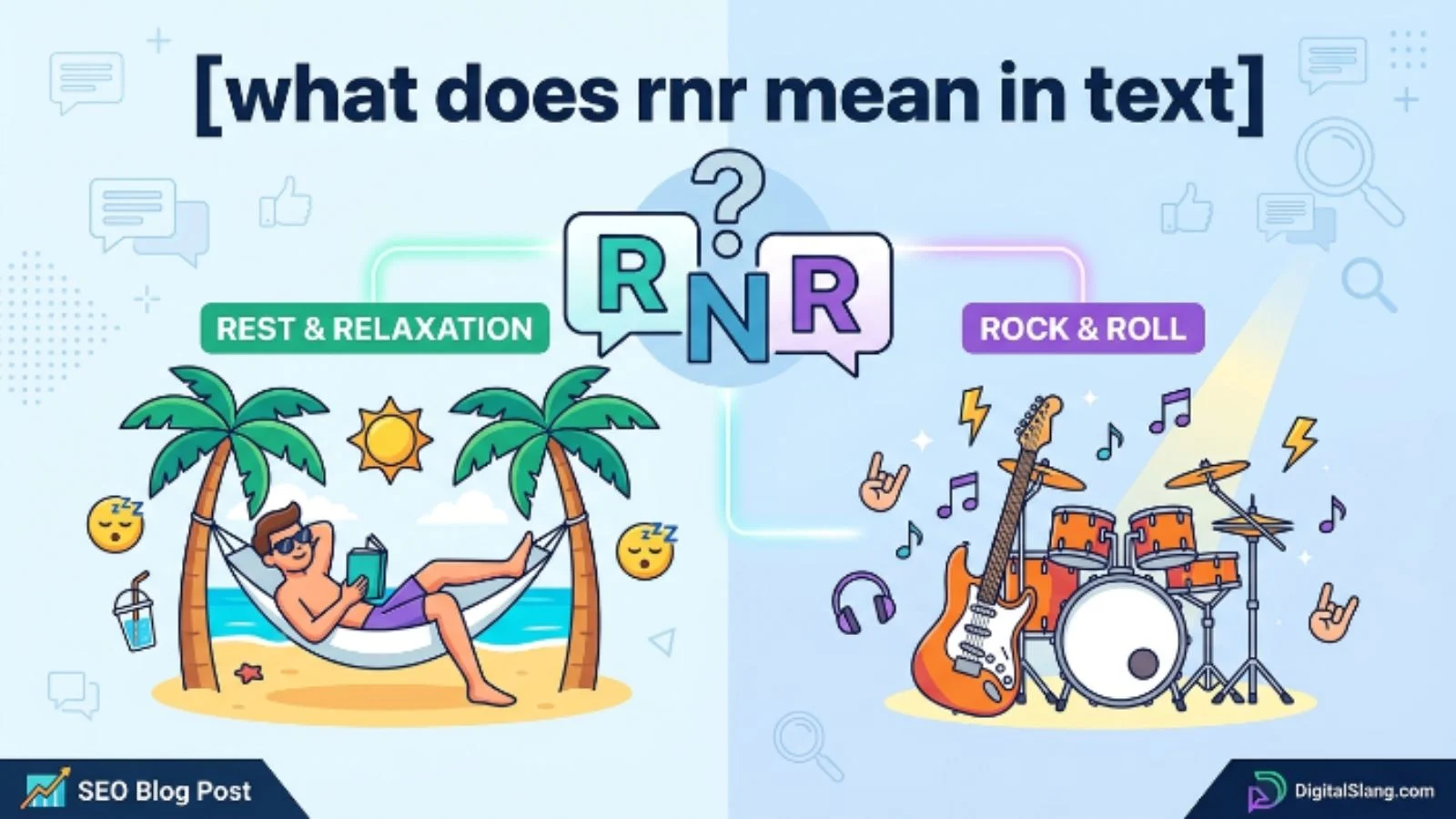
You’re texting someone, everything feels normal, and suddenly they drop: “I need some RNR.”
Now you pause.
Is it something serious? Are they upset? Or is it just casual slang you’re supposed to understand?
Don’t worry—this is one of those internet abbreviations that looks more complicated than it really is. The meaning of “RNR” depends on context, and once you understand it, you’ll start spotting it everywhere in chats, social media, and even workplace messages.
Let’s break it down in a clear and simple way so you never get confused again.
What Does RNR Mean in Text?
In most texting conversations, RNR means “Rest and Relaxation” or “Rest and Recovery.”
It is used when someone wants to take a break, unwind, or recover from stress, work, or tiredness.
However, RNR can have more than one meaning depending on the situation:
- Rest and Relaxation (most common in casual texting)
- Rest and Recovery (often used in fitness or health contexts)
- Rest and Recuperation (used in military or formal settings)
- Less commonly: Rock and Roll (used in music or fun expressions)
So, the correct meaning always depends on how and where it is used.
Simple Meaning of RNR in Easy Words
In simple terms, RNR means taking a break to feel better.
It usually refers to:
- Relaxing after a busy day
- Taking time off work or studies
- Recovering from stress or tiredness
- Doing nothing and just resting
Think of it like this:
If someone says “I need RNR,” they basically mean:
“I need time to relax and recharge.”
Where Is RNR Used?
You will see “RNR” in many digital and real-life communication spaces, such as:
1. Text Messages
Friends often use it casually:
- “I’m going offline for some RNR.”
2. Social Media
On platforms like Instagram, WhatsApp, or Snapchat:
- “Weekend RNR mode activated.”
3. Fitness and Health Chats
Used when talking about recovery:
- After workouts or injury recovery
4. Workplace Messages
Sometimes used informally:
- “Taking a day off for some RNR.”
5. Military Context (less common for everyday users)
- Rest and recuperation after duty or deployment
Why Do People Use RNR?
People love short forms like RNR because:
1. It Saves Time
Typing “rest and relaxation” is longer. RNR is quick.
2. It Feels Modern and Casual
Internet slang makes conversations feel natural and friendly.
3. It Expresses Emotion Quickly
Instead of explaining, RNR instantly shows:
- tiredness
- need for break
- stress relief
4. It’s Common in Online Culture
Short forms dominate texting culture today.
Real-Life Examples of RNR in Text
Let’s look at how people actually use it:
Example 1: Casual Chat
Friend A: “Where are you going?”
Friend B: “Home for some RNR.”
Meaning: Going home to rest and relax.
Example 2: After Work
“Long day at work. Need serious RNR tonight.”
Meaning: The person is very tired and wants to relax.
Example 3: Social Media Post
“Weekends are for RNR and peace.”
Meaning: Weekends are for resting and enjoying free time.
Example 4: Fitness Context
“I can’t train today, my body needs RNR.”
Meaning: The body needs recovery after exercise.
RNR vs Similar Terms (Comparison Table)
Here’s how RNR compares with similar expressions:
| Term | Full Meaning | Usage | Difference |
|---|---|---|---|
| RNR | Rest and Relaxation/Recovery | Casual texting, fitness, daily life | Broad meaning of taking a break |
| R&R | Rest and Recreation | Military, formal break time | More structured, official version |
| Chill | Relax or take it easy | Casual slang | Less formal, more general |
| Break | Short pause from activity | Work/study context | More neutral, less emotional |
| Downtime | Time off or inactivity | Professional/tech usage | More technical term |
When Should You Use RNR?
You should use “RNR” when you want to express:
- You are tired or exhausted
- You are taking a break from work or study
- You need mental or physical recovery
- You are spending time relaxing at home
- You want to keep your message short and casual
But it works best in informal conversations. Use it with:
- Friends
- Social media posts
- Casual chats
Avoid using it in very formal writing unless the audience understands slang.
Common Misunderstandings About RNR
Many people get confused about RNR. Let’s clear that up:
Misunderstanding 1: RNR means only “Rock and Roll”
Not true. That is a rare or outdated usage.
Misunderstanding 2: It is always military-related
No. That meaning exists, but it is not the most common in texting.
Misunderstanding 3: It means doing something active
Actually, it usually means the opposite—resting and slowing down.
Misunderstanding 4: It is always formal
In texting culture, it is mostly informal.
Pro Tips for Using RNR Correctly
Here are some simple tips to avoid confusion:
- Always check context before using it
- Use it only when talking about rest or recovery
- Don’t use it in serious or professional documents
- If your audience is older or unfamiliar with slang, explain it
- Combine it with context words like “need,” “going for,” or “time for”
Example:
- Correct: “I need some RNR this weekend.”
- Better: “I need some RNR after a long week.”
Final Thoughts
Now you know exactly what “RNR” means in text.
It’s a simple internet slang term that usually stands for rest and relaxation or recovery, and it is widely used in everyday digital conversations.
Even though it looks confusing at first, it’s actually one of the easiest slang terms once you understand its context.
So next time someone says they need RNR, you’ll know they’re not talking in code—they just need a break.
FAQ About RNR Meaning in Text
1. What does RNR mean in simple words?
RNR means taking a break to rest and relax or recover from stress or tiredness.
2. Is RNR the same as R&R?
They are similar, but R&R (Rest and Recreation) is more formal, while RNR is more casual and modern.
3. Can RNR mean rock and roll?
Yes, but that meaning is rare in texting and mostly used in music contexts.
4. Where is RNR commonly used?
It is mostly used in texting, social media posts, fitness conversations, and casual chats.