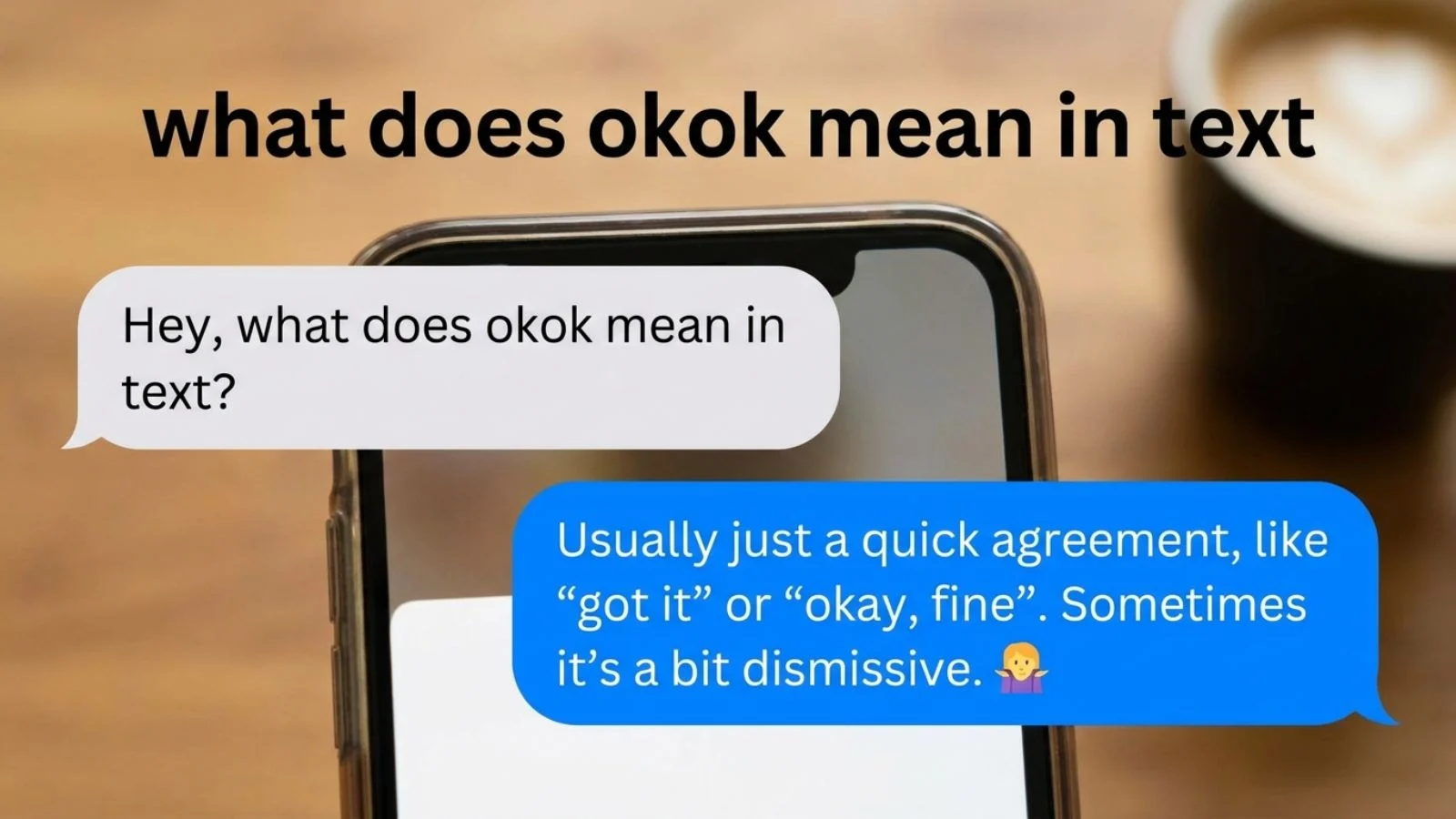
In simple words, “OKOK” in text means:
👉 “Okay, I understand” or “I agree with you.”
It is a casual, friendly way of saying “OK” but with a softer and more relaxed tone. People use it in chats, social media, and online messages when they want to show agreement, understanding, or acceptance without sounding strict or formal.
It is not a formal English word. It is internet slang used in daily communication.
Simple Meaning of OKOK in Text
The meaning of OKOK can change slightly based on the situation, but most of the time it means:
- I understand
- I agree
- Alright, fine
- No problem
- Message received
Example:
Friend 1: “Please send me the file by 5 PM.”
Friend 2: “OKOK”
👉 This means: “Alright, I will do it.”
So, OKOK = simple agreement or acceptance in a friendly way.
Origin & History of “OKOK”
The word OK has a long history. It started in the 1800s in America and became one of the most popular words in the world.
But what about OKOK?
- “OKOK” comes from online chatting culture.
- It became popular in texting apps like WhatsApp, Messenger, and social media.
- People started repeating “OK” to sound more casual or emotional.
Why repetition?
In digital communication:
- Repeating words makes tone softer
- It shows friendliness
- It feels less strict than a single “OK”
So instead of saying:
- “OK” (neutral)
People say:
- “OKOK” (friendly and relaxed)
How People Use OKOK in Daily Chats
People use OKOK in different situations. It depends on tone and context.
1. To Show Agreement
Used when someone agrees with a request or idea.
Example:
Friend: “Let’s meet at 6 PM.”
You: “OKOK”
👉 Meaning: “Yes, I agree.”
2. To Confirm Understanding
Used when someone understands instructions.
Example:
Teacher: “Submit your homework tomorrow.”
Student: “OKOK”
👉 Meaning: “I understand.”
3. To End a Conversation Politely
Sometimes used to close a chat quickly.
Example:
Person: “I’m busy now, talk later.”
Reply: “OKOK”
👉 Meaning: “No problem, bye for now.”
4. To Show Light Emotion (Not Serious)
Used in friendly or casual chats.
Example:
Friend: “Don’t forget my birthday!”
You: “OKOK don’t worry!”
👉 Meaning: Friendly reassurance.
Real-Life Examples of OKOK in Conversations
Example 1: Simple Agreement
A: “Bring snacks tomorrow.”
B: “OKOK”
👉 B agrees to bring snacks.
Example 2: Instruction Understanding
A: “Turn off the lights before leaving.”
B: “OKOK”
👉 B understands the instruction.
Example 3: Casual Chat
A: “I will call you later.”
B: “OKOK”
👉 B is fine with waiting.
Example 4: Friendly Reminder
A: “Don’t forget our meeting.”
B: “OKOK I won’t forget.”
👉 B confirms politely.
Personality Traits Linked with “OKOK” Users
People who often use OKOK in texting usually show these traits:
1. Friendly Nature
They prefer soft and polite communication.
2. Casual Communicators
They like relaxed, informal chatting styles.
3. Easygoing Attitude
They are not strict or formal in conversations.
4. Quick Responders
They use short replies to save time.
5. Social Media Active
They often use messaging apps and online platforms.
👉 Important: This does NOT define a person’s full personality. It only shows texting style.
When and Where to Use OKOK
| Situation | Is “OKOK” Suitable? | Reason |
|---|---|---|
| Chat with friends | Yes | Casual tone |
| Family texting | Yes | Friendly |
| Work email | No | Too informal |
| School chat | Sometimes | Depends on teacher |
| Professional meeting | No | Not formal enough |
👉 Always remember: OKOK is informal language.
Common Mistakes & Misunderstandings
Mistake 1: Thinking it means “Angry”
Some people think repeating words shows frustration.
👉 Wrong. “OKOK” is usually friendly.
Mistake 2: Using in formal emails
Example:
“OKOK I will send report.”
👉 This is incorrect in professional writing.
Better:
“I will send the report.”
Mistake 3: Confusing with “okay okay”
They mean the same thing, but:
- OKOK = texting slang
- okay okay = spoken repetition
Mistake 4: Overusing it
Too much use can make messages unclear.
Example:
“OKOK OKOK OKOK”
👉 This looks unprofessional or confusing.
Modern Usage of OKOK (2026 Trends)
In 2026 digital communication, OKOK is still used, but with slight changes.
1. Faster Chat Style
People prefer short replies like:
- OKOK
- K
- Alright
2. Social Media Comments
Used in comments like:
- “OKOK got it 😂”
- “OKOK I understand now”
3. Voice-to-Text Messaging
Even when speaking becomes text, people still say “OKOK” verbally.
4. Youth Communication Style
Teenagers often use it in gaming chats and group messages.
5. AI Chat Conversations
Even in AI-based chats, users type “OKOK” for quick confirmation.
Difference Between OK, OKOK, and OKAY
| Word | Meaning | Tone |
|---|---|---|
| OK | Simple agreement | Neutral |
| OKOK | Friendly agreement | Casual |
| OKAY | Slightly formal | Neutral to polite |
👉 Example:
- OK = short and neutral
- OKOK = friendly and soft
- OKAY = polite and complete
Why People Prefer Using OKOK
There are many reasons why this slang is popular:
1. Fast Typing
It is quicker than full sentences.
2. Friendly Tone
It feels less strict than “OK.”
3. Easy to Understand
Almost everyone knows its meaning.
4. Social Media Culture
Online platforms promote short communication.
5. Emotional Softness
It avoids sounding rude.
Similar Words and Alternatives
Here are other ways people express the same meaning:
- OK
- Got it
- Alright
- Sure
- Fine
- Understood
- No problem
👉 All depend on tone and situation.
FAQs About OKOK Meaning in Text
1. What does OKOK mean in chat?
It means “I understand” or “I agree” in a casual way.
2. Is OKOK rude?
No, it is not rude. It is friendly and informal.
3. Can I use OKOK in formal writing?
No, it is not suitable for formal emails or business writing.
4. What is the difference between OK and OKOK?
OK is neutral, while OKOK is more casual and friendly.
5. Why do people repeat OK?
Repetition makes the tone softer and more natural in texting.
6. Is OKOK used in 2026?
Yes, it is still used in chats, social media, and messaging apps.
7. Does OKOK mean excitement?
Not usually. It mainly means agreement or understanding.
Conclusion
In simple terms, OKOK in text means agreement, understanding, or acceptance in a friendly and casual way. It is widely used in messaging apps, social media, and daily chats. While it is not a formal word, it plays an important role in modern digital communication by making conversations short, soft, and natural. However, it should not be used in professional writing or formal emails. Understanding slang like OKOK helps you communicate better in today’s online world. If you want to sound natural in chats, you can safely use it with friends and casual conversations.