If you’ve been scrolling through WhatsApp, Instagram, TikTok comments, or even Snapchat conversations, you might have seen someone casually reply with “igual”.
And if your first reaction was confusion, you’re not alone.
Is it English slang? Is it Spanish? Does it mean “okay,” “same,” or something totally different?
The truth is, this tiny word carries more meaning than most people realize. And depending on the context, it can completely change the tone of a conversation.
Let’s break it down in the simplest way possible so you never get confused again.
What Does “Igual” Mean in Text?
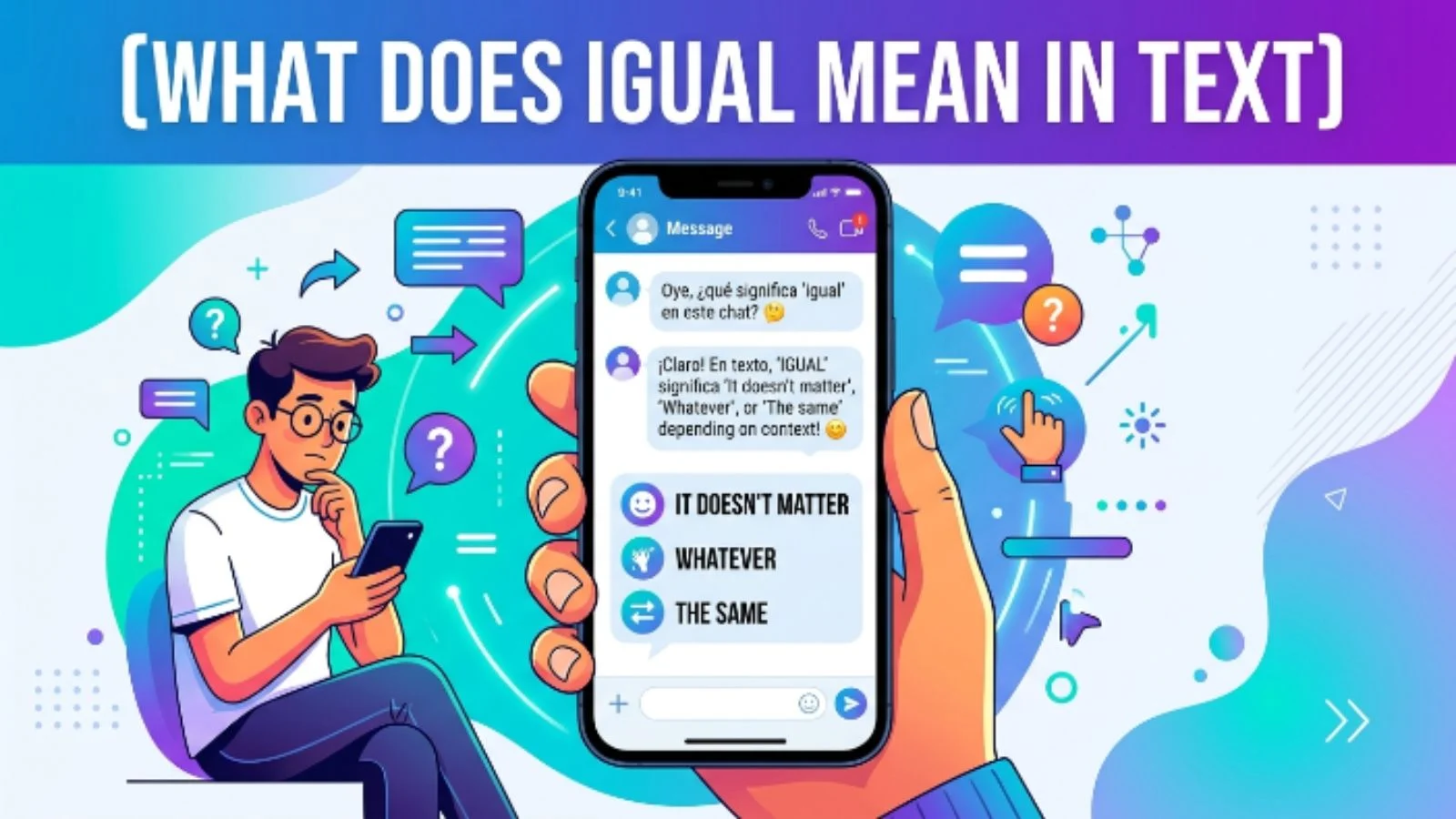
In texting and online conversations, “igual” generally means “same,” “likewise,” or “I feel the same way.”
It comes from Spanish and Portuguese, where igual literally translates to “equal” or “same.”
But in modern internet slang, people use it in a more relaxed, conversational way to show agreement or similarity.
Simple definition:
“Igual” = Same / Me too / I agree / Likewise (depending on context)
Simple Meaning of Igual (Explained Like a Friend)
Think of “igual” as a shortcut way of saying:
- “I feel the same”
- “Same here”
- “I agree with you”
- “It doesn’t matter to me, it’s the same”
It’s short, casual, and slightly emotional depending on how it’s used.
For example:
- If someone says, “I’m tired today.”
- And you reply, “Igual.”
You’re basically saying:
“Same, I’m tired too.”
Where Is “Igual” Used?
“Igual” is used widely across different platforms, especially where casual conversation happens:
1. Messaging apps
- Messenger
- Telegram
People use it in quick replies instead of typing full sentences.
2. Social media comments
- Instagram comments
- TikTok replies
- Twitter/X threads
It’s often used to agree with opinions or feelings.
3. Multilingual chats
It appears a lot in conversations where people mix English with Spanish or Portuguese.
4. Gaming chats
Players use it to quickly agree with teammates without typing long responses.
Why Do People Use “Igual” in Text?
There are a few simple reasons why this word became popular in online communication:
1. It’s short and fast
Instead of typing “me too” or “I agree,” people just type “igual.”
2. It sounds natural in bilingual conversations
Many internet users mix languages, especially English + Spanish.
3. It feels casual and effortless
It gives a relaxed tone instead of a formal response.
4. It’s trendy in online culture
Short slang words often spread quickly on social media.
Real-Life Examples of “Igual” in Text
Let’s understand it with real conversation examples:
Example 1: Expressing the same feeling
Person A: I didn’t sleep well last night
Person B: Igual
Meaning: “Same here, I also didn’t sleep well.”
Example 2: Agreeing with someone
Person A: This movie was kind of boring
Person B: Igual
Meaning: “I agree, I felt the same.”
Example 3: Casual response
Person A: I’m going out later
Person B: Igual
Meaning: “Same, I’m going out too.”
Example 4: Indifference or neutral tone
Person A: Pizza or burgers?
Person B: Igual
Meaning: “I’m okay with either, both are the same to me.”
“Igual” vs Similar Terms
Here’s a simple comparison so you can clearly understand the difference:
| Term | Meaning in Text | Tone | Usage Example |
|---|---|---|---|
| Igual | Same / I agree / likewise | Casual, neutral | “I’m tired.” → “Igual” |
| Same | Exactly the same | Direct | “Same!” |
| Me too | I also feel the same | Friendly | “Me too” |
| Likewise | Formal version of agreement | Polite/formal | “Likewise” |
| Okay/Ok | Neutral acknowledgment | Neutral | “Ok” |
When Should You Use “Igual”?
You should use “igual” when:
- You want to agree casually
- You feel the same as someone
- You want a short response
- You are chatting in a relaxed tone
- You’re in bilingual (Spanish-English) conversations
It works best in informal chats, not professional or formal writing.
Common Misunderstandings About “Igual”
Many people misunderstand this word when they first see it.
1. Thinking it means “goodbye”
It does not mean goodbye. It means agreement or similarity.
2. Thinking it’s only Spanish grammar
While it is a Spanish word, it is also used as internet slang in many countries.
3. Assuming it always means “exactly the same”
Not always. Sometimes it simply means “I agree” or “I feel the same,” not identical situations.
4. Confusing tone
Depending on context, it can sound:
- Neutral
- Casual
- Slightly uninterested
So tone matters a lot.
Pro Tips for Using “Igual” Correctly
If you want to use it naturally, follow these tips:
Use it only in casual chats
Don’t use it in formal emails or professional messages.
Match the tone of the conversation
If the chat is friendly and relaxed, “igual” fits perfectly.
Pay attention to context
It can mean agreement, similarity, or neutrality depending on the situation.
Don’t overuse it
Using it too often can make your messages sound repetitive.
Final Thoughts
“Igual” might look like a small word, but it carries a surprisingly flexible meaning in text conversations.
At its core, it simply expresses similarity, agreement, or shared feelings. Whether you’re chatting with friends, commenting on social media, or responding quickly in a conversation, it helps you communicate in a short and natural way.
Just remember: context is everything. The same word can feel slightly different depending on how and where you use it.
So next time you see “igual” in a message, you’ll know exactly what it means—and maybe even start using it yourself.
FAQ: What Does Igual Mean in Text?
1. What does igual mean in simple words?
“Igual” means “same,” “me too,” or “I agree” depending on the context of the conversation.
2. Is igual English or Spanish?
It is originally a Spanish (and also Portuguese) word meaning “equal” or “same,” but it is widely used in online slang.
3. Can I use igual in formal messages?
No, it is best used in casual conversations, not professional or formal communication.
4. Does igual always mean the same thing?
Not always. It can mean agreement, similarity, or neutrality depending on how it is used.