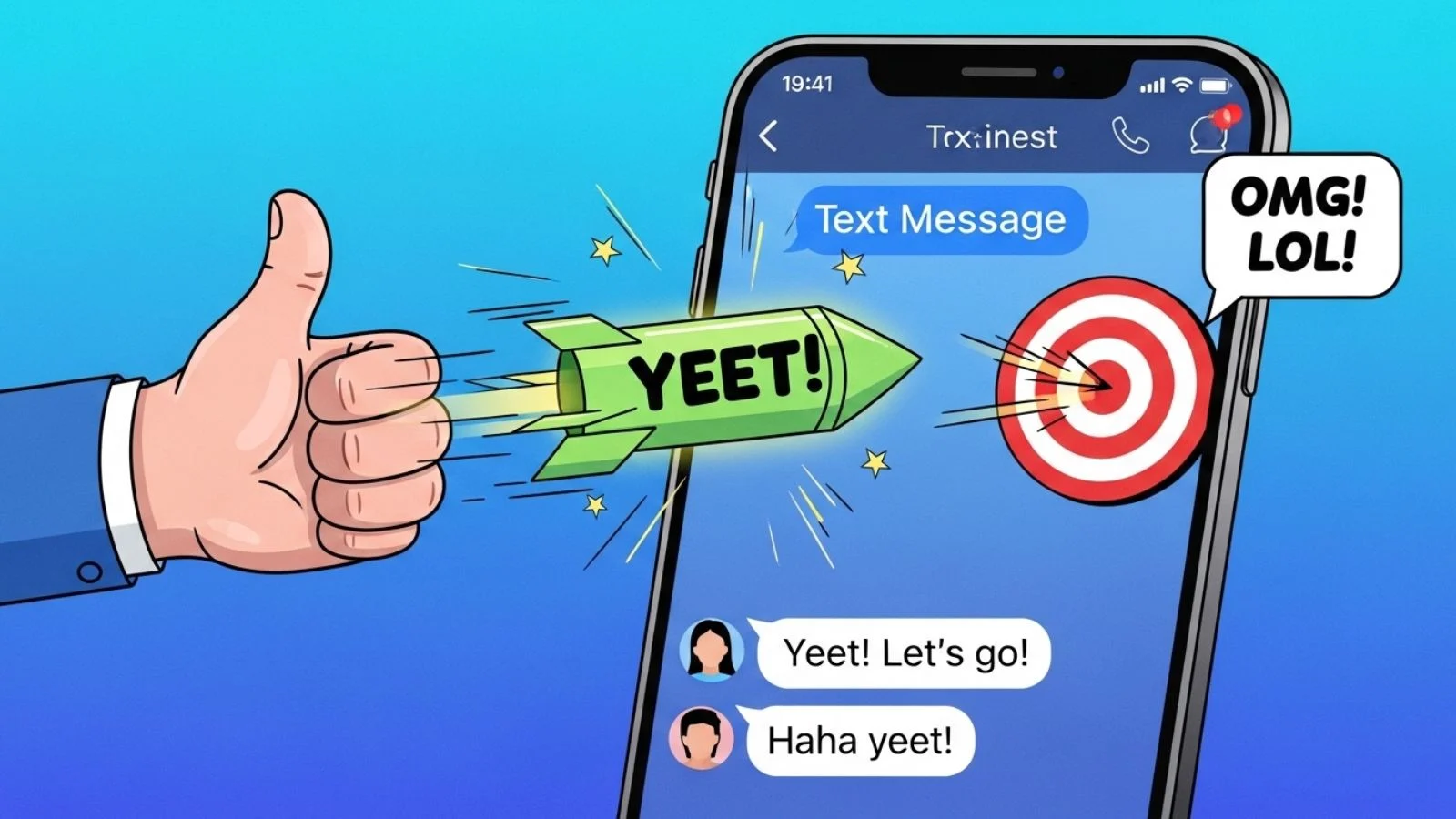
The word “yeet” is a modern slang term commonly used in online chats, social media, and text messages. Its meaning can change depending on the context, but generally, “yeet” means to throw something with force or excitement. It can also express strong emotions like joy, surprise, or approval.
In text, “yeet” is informal and mostly used by younger people. It’s rarely used in professional writing but appears often in casual conversations, memes, and social media posts.
Simple Definition:
- Yeet: To throw or launch something forcefully or to express excitement or approval.
Origin & History of Yeet
The word “yeet” first appeared online around 2014, gaining popularity on social media platforms like Vine, TikTok, and Twitter. It became widely known after a dance video called the “Yeet Dance” went viral.
Timeline of Yeet:
| Year | Event | Details |
|---|---|---|
| 2014 | First viral use | Vine videos showed people yelling “yeet” while throwing objects. |
| 2015 | Meme culture | Used in online memes to describe forceful throwing. |
| 2018 | TikTok explosion | Became a trend in dance and reaction videos. |
| 2020–2026 | Everyday slang | Integrated into text messages and online chats, especially among teens and young adults. |
The word does not have roots in traditional English. It originated as internet slang and evolved with online culture.
How to Use Yeet in Text
Yeet is versatile. You can use it to:
- Show excitement or energy:
- “I just finished my homework! Yeet!”
(This shows the person is excited.)
- “I just finished my homework! Yeet!”
- Describe throwing something:
- “He yeeted the ball across the yard.”
(This means he threw the ball very hard.)
- “He yeeted the ball across the yard.”
- React to something surprising or impressive:
- “She won the contest! Yeet!”
(This shows approval or happiness.)
- “She won the contest! Yeet!”
Real-Life Examples & Short Dialogues
Here are some dialogues showing yeet in context:
Example 1:
- Alex: “I can’t find my pen.”
- Sam: “Just yeet it into your backpack!”
(Sam is jokingly saying to throw the pen into the backpack.)
Example 2:
- Mia: “I finished the race first!”
- Liam: “Yeet! That’s awesome!”
(Liam is celebrating Mia’s achievement.)
Example 3:
- Emma: “The cat knocked over my drink.”
- Noah: “Yeet that cat out!”
(Noah humorously exaggerates throwing the cat out.)
Personality Traits & Usage Context
People who use yeet often show:
- Humor: The word is playful and lighthearted.
- Confidence: Using slang casually shows comfort in informal settings.
- Youthful energy: Mostly used by teens and young adults.
When to use yeet:
- Casual conversations with friends.
- Texts or social media posts.
- Gaming chats and reaction videos.
When not to use yeet:
- Professional emails or messages.
- Formal writing or academic papers.
Modern & Relatable Examples (2026 Update)
In 2026, yeet has adapted to new trends:
- Gaming:
- “I just yeeted the boss with my new weapon!”
(Players describe forcefully defeating an enemy.)
- “I just yeeted the boss with my new weapon!”
- Social media challenges:
- “Yeet challenge accepted!”
(Users show excitement to participate in trends.)
- “Yeet challenge accepted!”
- Daily life:
- “Yeet! Free coffee at my favorite café!”
(Expressing happiness about something small but exciting.)
- “Yeet! Free coffee at my favorite café!”
Common Mistakes or Misconceptions
Many beginners confuse or misuse yeet. Here are some tips:
Misconception 1: Yeet only means throwing.
- Truth: Yeet can also express excitement or joy.
Misconception 2: Yeet is rude.
- Truth: It’s usually playful and not offensive unless used in an aggressive context.
Misconception 3: Yeet can be used anywhere.
- Truth: Avoid using yeet in formal or professional writing.
Quick Dos and Don’ts Table:
| Dos | Don’ts |
|---|---|
| Use in casual chats | Use in business emails |
| Express excitement or humor | Use to insult someone |
| Use with friends | Overuse in serious posts |
| Combine with verbs like throw or win | Use in academic writing |
Yeet in Pop Culture
Yeet appears in:
- Memes: Often paired with exaggerated images of people throwing objects.
- TikTok videos: Dance moves often include yelling “yeet.”
- YouTube clips: Gamers and vloggers use yeet for reactions.
It has become part of internet culture and everyday slang.
FAQs About Yeet
1. Is yeet a verb or an interjection?
- Yeet can be both. As a verb, it means to throw something. As an interjection, it shows excitement.
2. Can I use yeet in professional settings?
- No. Yeet is informal and not suitable for work emails, essays, or reports.
3. Is yeet still popular in 2026?
- Yes, especially among teens, young adults, and social media users.
4. Can yeet be used sarcastically?
- Absolutely. For example, “Oh great, I spilled coffee—yeet!” shows humor with sarcasm.
5. How do you pronounce yeet?
- Pronounced as “yeet”, rhyming with “meet.”
6. Are there alternative words to yeet?
- Yes. Words like “throw,” “launch,” “toss,” or “woohoo” can work depending on context.
7. Can I use yeet in memes?
- Definitely. Memes and GIFs often use yeet to show exaggerated actions or excitement.
Tips for Using Yeet Correctly
- Context matters: Only use yeet in casual, informal situations.
- Tone matters: Combine with excitement or humor for best effect.
- Combine with actions: Pair with verbs like throw, win, or jump to make it clear.
Examples:
- “Yeet the ball!” → Throwing action.
- “Yeet! I passed my exam!” → Excitement.
Conclusion
In 2026, yeet remains a fun, versatile slang word. It can mean throwing something, expressing excitement, or reacting to a surprising event. Using yeet correctly requires understanding its casual nature and context. Whether in texts, social media posts, or online chats, it adds humor and energy to conversations.
Start practicing by trying it in your next casual message or meme caption. Mastering yeet helps you connect with younger audiences and stay up-to-date with modern digital language trends.